
Like all forms of arthritis, basal joint arthritis progresses gradually.
Over time, wear and tear of the cartilage at the base of the thumb leads to changes that are visible on imaging…
but also often causes increased pain, loss of mobility and increasing functional discomfort. Understanding the different stages of this progression means you can better anticipate the impact of the condition, adapt your day-to-day activities and consider the most appropriate solutions for each phase.
This page is part of our main section on basal joint arthritis, the main stages in its progression being described here.

Stage 1: early signs, sometimes discreet
The cartilage begins to break down, but the joint still retains a normal shape.
X-rays are often unrevealing, which complicates the diagnosis. However, pain may already be present, particularly at the base of the thumb, after repeated actions such as DIY, gardening or holding an object between finger and thumb.
In this case, the diagnosis is essentially clinical, made during a discussion with a healthcare professional.
This stage may go unnoticed. That’s why it’s so important to know the symptoms of basal joint arthritis so that you can talk about it at the first sign of discomfort.
Stage 2: the discomfort becomes part of everyday life
The joint space narrows, a sign of increased wear on the cartilage.
This pinching is now visible on X-ray. The pain becomes more frequent, sometimes even when resting or at night. A loss of strength is often noted, sometimes accompanied by a slight deformity of the joint.
Management at this stage is based on conservative or medical treatments:
- custom-made splints, worn mainly at night
- tailored physiotherapy
- targeted injection (guided by ultrasound or X-ray)
- anti-inflammatory medicine if necessary
For more information see ‘Non-surgical treatments for basal joint arthritis’


Stage 3: persistent pain and loss of mobility
The cartilage is almost completely destroyed, and osteophytes (bone outgrowths) form.
The pain becomes almost constant, sometimes intense, even for simple actions such as writing, buttoning a garment or opening a sachet. The thumb loses its flexibility, mobility decreases and it becomes difficult to pinch the thumb and index finger together.
It often has a major impact on daily life. At this stage, a specialist opinion (from a surgeon or rheumatologist) is required to assess the treatment options available.
Stage 4: severe joint damage
This is known as advanced basal joint arthritis.
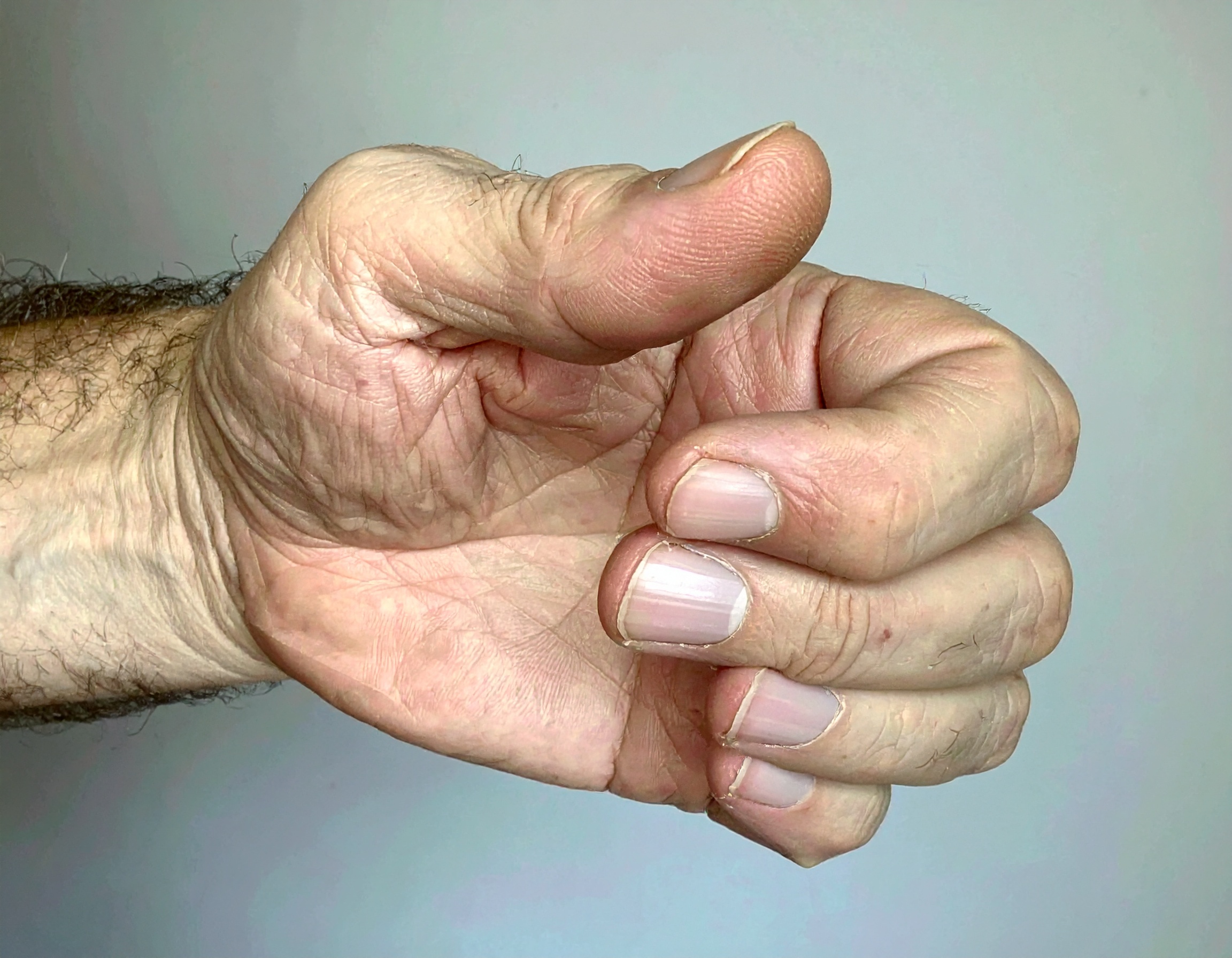
The joint is very deformed and the cartilage is completely destroyed. The bones may rub against each other, causing sharp pain. The stiffness is significant and some movements become impossible.
At this stage, the trapeziometacarpal joint may lock in a dislocated position, causing secondary dislocation of the metacarpophalangeal joint. This gives rise to what is known as a zigzag deformity.
Surgery is often considered, particularly if pain persists despite conservative treatment, or if there is a significant loss of function. Find out more about surgical treatments.
Variable progression depending on the individual
Basal joint arthritis does not always progress in a linear fashion. For some, it progresses slowly over several years. For others, the discomfort sets in quickly.
Many factors influence this progression: family history, repetitive manual activities, bilateral form (affecting both hands), age or menopause, other associated conditions such as rheumatoid arthritis or, more rarely, chondrocalcinosis.
Further information: risk factors for basal joint arthritis.

Adapting treatment to each stage
Identifying the stage of progression enables targeted treatment to be proposed:
- In early forms: adjustments to movements, the wearing of light braces or splints and gentle exercises are often enough to improve comfort.
- In the intermediate stages: structured medical treatment (custom-made braces or splints, guided injections, rehabilitation) provides effective relief.
- In the event of severe or persistent discomfort: a hand surgeon can suggest appropriate surgical solutions, such as a trapeziectomy or fitting a prosthesis.
Regular follow-ups enable the treatment to be adapted over time and prevent thumb function from deteriorating too rapidly.
See the hand surgeon directory.
Remember:
Basal joint arthritis progresses in stages, from simple discomfort to significant loss of mobility. Knowing the stages of this progression gives you the means to act early, preserve your thumb function and consider the right options at the right time.
If in doubt or if the condition worsens, don’t hesitate to consult a hand specialist (surgeon or rheumatologist) to review your situation.

