
Which specialists should I consult if I develop basal joint arthritis?

Basal joint arthritis, a form of osteoarthritis affecting the trapeziometacarpal joint at the base of the thumb, can lead to pain, stiffness and loss of mobility in your hand. There is no single specialist for treating it and there are various ways of tackling the condition. Treatment is often multidisciplinary, meaning that a number of different healthcare professionals will be called on to assist at various times, according to how the symptoms develop. GPs, rheumatologists, physiotherapists, orthotists and even hand surgeons can each have a role to play. The aim of this article is to help you understand who to consult, when to consult them and why to do so, based on your specific situation.
The primary care doctor: the first point of reference in the care pathway
In the event of thumb pain, the GP is often the first point of contact. He assesses the symptoms, prescribes an X-ray if necessary and refers the patient to a specialist. He may also start a course of medication (painkillers, anti-inflammatories) or recommend that the joint be rested.
💡 It remains an essential anchor point throughout the care pathway, ensuring follow-up and coordination between the various professionals.
The rheumatologist: to refine the diagnosis and initiate treatment
A rheumatologist is a specialist in joint diseases. He/she becomes involved if pain persists or if the diagnosis is uncertain. His/her role is as follows:
- To confirm that you are suffering from basal joint arthritis and to assess the stage;
- To propose non-surgical treatments (injections, braces or splints, disease-modifying medication if required);
- To provide advice on adapting how you use your hands on a day-to-day basis, in order to limit pain.
A rheumatologist will often work in conjunction with other healthcare professionals, to offer multidisciplinary care.
Occupational therapists and orthotists: adapting how you live your day-to-day life
One of the first ways of tackling basal joint arthritis is often mechanical: relieving the joint by modifying the way you perform certain hand movements or stabilising your thumb.
- Occupational therapists help patients to adapt the way they use their hands on a day-to-day basis (carrying, gripping, turning) and to avoid painful movements.
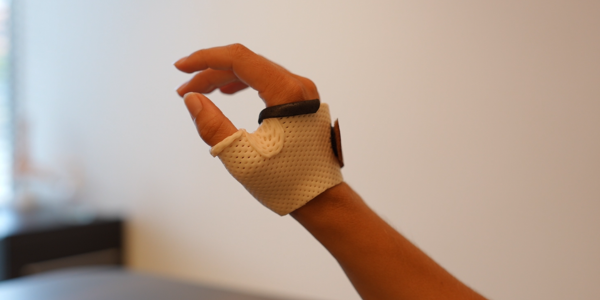
- Orthotists design customised braces or splints or advise on suitable models, for rest or support.
The healthcare professionals specified above are especially useful when pain starts interfering with your day-to-day activities, or to prevent the condition from getting worse.
Physiotherapists: maintaining hand mobility
Pain does not have to mean immobility. Physiotherapists help to keep your thumb mobile, strengthen the surrounding muscles and limit stiffness.
They provide long-term support, in particular through the following:
- hands-on physiotherapy sessions;
- exercises you can perform at home;
-
advice on keeping your joints supple on a daily basis.
Hand surgeons: for advanced cases
When conservative treatments are no longer sufficient and the pain becomes debilitating, it may be time to consider surgery. A hand surgeon will assess the options, based on the patient’s anatomy, his/her work and activities and his/her expectations in terms of recovery.
Two main techniques are used:
- trapeziectomy-ligamentoplasty;
-
trapeziometacarpal prosthesis.
The decision needs to be thought through carefully, in concert with the patient, and tailored to his/her specific case, often after various stages of treatment.

A support team
Other healthcare professionals may also be involved, depending on the requirements in your specific case:
- An occupational health doctor, to adapt your workstation or the work you perform and evaluate whether the condition should be recognised as an occupational illness,
-
A psychologist or a chronic pain centre, if the pain has a major impact on your quality of life,
- A pharmacist, to help you make the best use of the pharmacological treatments or braces and splints available.
What you need to remember
There is no single answer to the question ‘whichspecialistshould I consult? ’. It alldepends on your specific situation, how intense the pain is and your objectives (pain relief, stabilisation, surgery). The healthcare professionals should complement one another as a basis for successful treatment. The important thing is not to try to cope with the pain on your own: there are solutions at every stage.
