
Rhizarthrosis, also known as basal joint arthritis, is a joint condition that often develops gradually, sometimes without you noticing.
In the early stages the signs are barely noticeable and irregular and many people attribute them to simple hand fatigue.
There are certain symptoms to really look out for though. Recognising these early signs helps provide a better understanding of how the affected joint – the trapeziometacarpal joint – is working and offers an opportunity to take early measures to preserve thumb mobility as much as possible. This is an important step in understanding rhizarthrosis and preparing for its impact on day-to-day life

Mechanical pain at the base of the thumb
The most common symptom in the early stages of the condition is pain at the base of the thumb, often triggered by hand use.
This is known as mechanical pain. It is aggravated by thumb exertion, in particular with movements involving pinching, twisting or gripping.
Mechanical pain may be manifested when you turn a key, unscrew the cap on a bottle, open a jar or carry a bag. The pain starts off as intermittent and disappears at rest, but then tends to return more regularly over time.
Even if the pain is not excessive, repeated pain in the same location should be monitored carefully, because it is often the first sign of rhizarthrosis.
Discomfort when performing day-to-day hand movements, tasks and activities
Gradually, certain types of movement become less flowing and easy to perform.
Your thumb starts to seem less precise, slower, even ‘weak’. It takes more effort than before to perform day-to-day tasks, such as writing, cooking, doing up buttons or using a mouse.
This functional discomfort may be manifested as follows:
In some cases this discomfort even comes before any pain develops.

Temporary stiffness of the thumb
You may also experience stiffness in your thumb when you wake up or after a period of inactivity, as if your thumb needed ‘a drop of oil’.
Although this stiffness generally only lasts a few minutes and diminishes as you start to move, it may indicate the early signs of joint damage.
Temporary stiffness like this is sometimes overlooked, but it is a common sign in the early stages of rhizarthrosis.
Joint noises (not always a sign of rhizarthrosis)
Some people may notice cracking, clicking or grinding sounds in their thumb joints.
This phenomenon, known as crepitus, can occur with thumb movement but is not specific to rhizarthrosis: it can occur even if you have a healthy joint, but it may also be a sign of joint damage.
Crepitus on its own, therefore, may not indicate rhizarthrosis.
But if it is accompanied by other symptoms (pain, discomfort, stiffness, etc.), then it may be a good idea to seek medical advice.
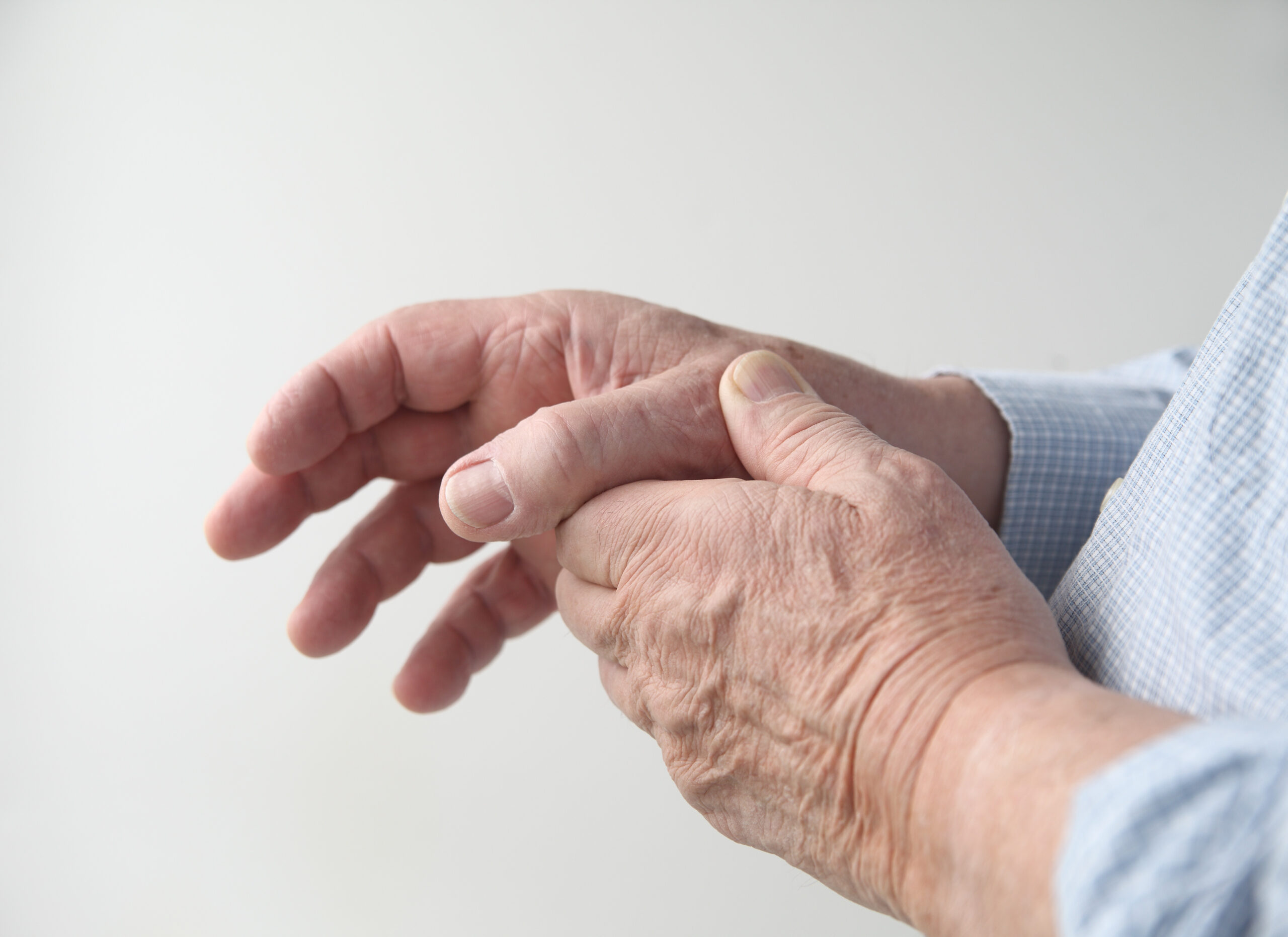
Signs of inflammation: redness, heat, swelling
Sometimes rhizarthrosis may begin with or be accompanied by inflammatory flare-ups, signs of which include:
If you experience these symptoms, it is important to consult a healthcare professional as soon as possible, to rule out other causes, such as inflammatory arthritis (gout, chondrocalcinosis, rheumatoid arthritis, etc.) or joint infection.
Other hidden signs to look out for
Some people may notice changes in thumb appearance or posture. Their thumb may seem:
These signs often go under the radar, but they may be the first indications of joint damage.
Should you consult a doctor as soon as you spot the first symptoms?
Yes. If the symptoms start to recur, limit your activities, or intensify even after resting your thumb, we recommend discussing them with a healthcare professional.
You will then be given a clinical examination for possible rhizarthrosis. An X-ray can then be used to confirm joint damage or indicate a differential diagnosis (a condition with symptoms similar to rhizarthrosis but requiring different treatment).
To find out more, see our page on ‘Diagnosis of rhizarthrosis’.


