
Sometimes people talk about thumb arthritis and sometimes about rhizarthrosis…
Although these two terms are similar, they do not mean exactly the same thing.
If patients recognise the difference, it gives them a better understanding of the specifics of rhizarthrosis, so that they can spot its development and communicate more confidently with healthcare professionals.
This page forms part of the section on ‘Understanding rhizarthrosis’, together with articles on the first symptoms, the causes and diagnosis of rhizarthrosis.
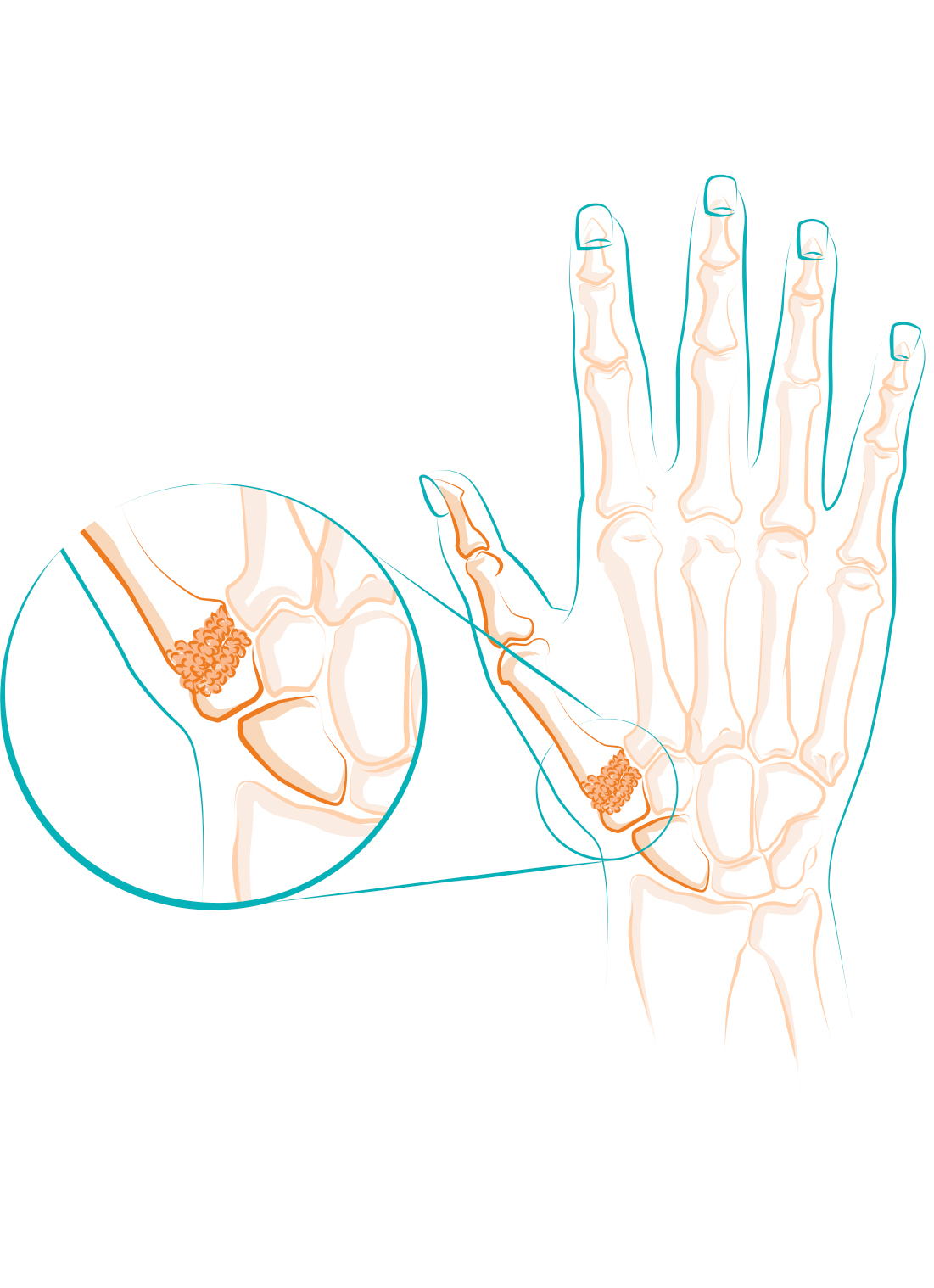
Thumb arthritis: a generic term
The term thumb arthritis is often used in everyday language to refer to wear of the cartilage in one of the thumb joints.
It may refer to a number of specific areas among the three joints of the thumb, listed here from the tip to the base:
In the vast majority of cases, wear affects the lowest joint: the trapeziometacarpal joint. And this is what is known as rhizarthrosis.
Rhizarthrosis: a very specific form of thumb arthritis
The word ‘rhizarthrosis’ comes from Greek:
Rhizarthrosis therefore refers to osteoarthritis at the base of the thumb, affecting the trapeziometacarpal joint (between the trapezium bone of the wrist and the metacarpal bone of the thumb).
It is a very common form of arthritis and is found in particular in women over the age of 50. It can also develop earlier, particularly in the event of repetitive movements or in people who are predisposed to the condition.
Characteristic signs of rhizarthrosis include the following:

Thumb arthritis or rhizarthrosis: how to distinguish between the two?
The two terms are sometimes used interchangeably in practice, but they do not mean exactly the same thing:
To sum up then, all rhizarthrosis is arthritis of the thumb, but not all arthritis of the thumb is rhizarthrosis.
Why is this distinction useful?
There are a number of advantages to knowing the difference between the two concepts:
Remember:


