
If the joint at the base of your thumb is painful, uncomfortable or unstable, wearing a brace or splint can provide valuable relief.
Although it is not intended as a substitute for other treatments, this non-pharmacological solution is often a useful way of coping with rhizarthrosis day-to-day, provided that it is well adapted to your hand and your specific situation.
Wearing a brace or splint is one of the options discussed in the section ‘Treatments and care for rhizarthrosis’, in conjunction with medicinal products, injections, physiotherapy or surgery.

How does a brace or splint help with rhizarthrosis?
Rhizarthrosis, or basal joint arthritis, involves progressive wear of the cartilage of the trapeziometacarpal (TMC) joint.
This leads to pain, stiffness, loss of strength and even thumb deformation in advanced cases.
Wearing a brace or splint can therefore help to:
A brace or splint cannot ‘cure’ arthritis, but it can help to keep your thumb working, particularly at certain times of the day or if the symptoms deteriorate.
Night splint or functional thumb brace: what are the differences?
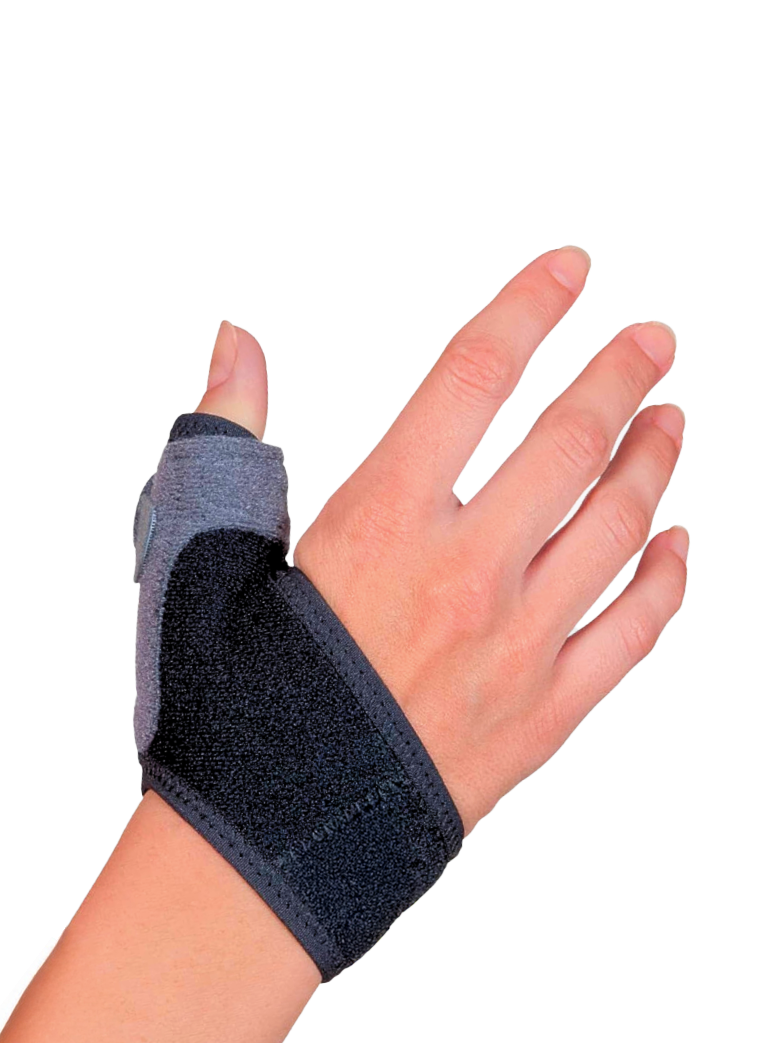
There are various types of brace or splint for various uses, depending on the situation.
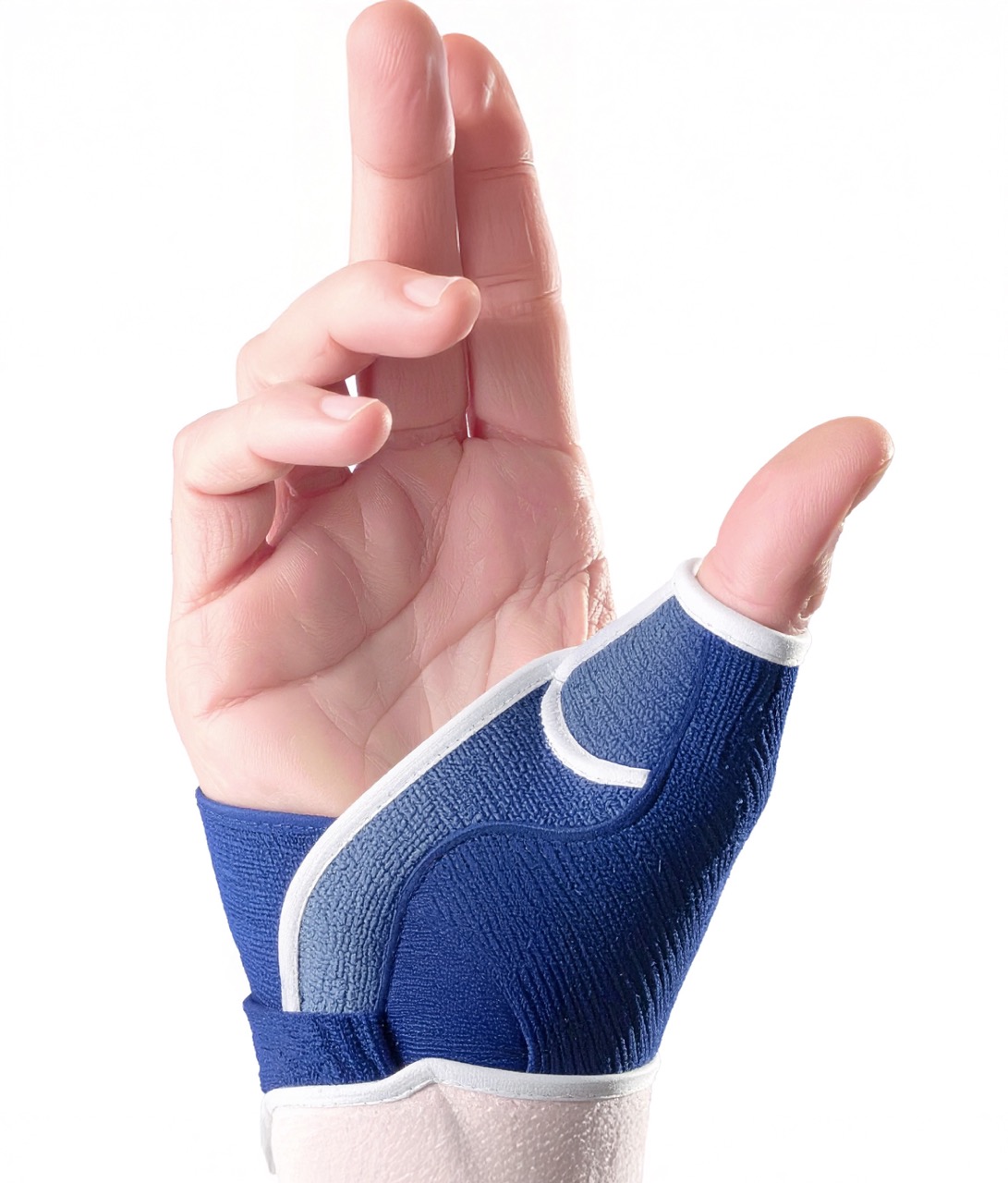
Functional thumb brace
Night splint
Which of these two options to choose depends on a number of factors: the stage of progression of rhizarthrosis, the tasks or activities performed and, most importantly, what the patient feels.
For a more detailed understanding of the benefits of each, read our article: Should you wear a brace or splint to prevent rhizarthrosis? Advantages and practical advice.
Does a brace or splint always need to be custom-made?
There are two main categories of brace or splint:
Ready-to-use braces may be fine in certain situations, but they do have limitations – e.g. not fitted to size, prolonged discomfort, unsuitable materials.
Custom braces or splints, on the other hand, offer a number of benefits:
With advanced rhizarthrosis, a custom brace or splint can really improve quality of life.

How to wear your brace or splint properly: practical advice
The benefits from wearing a brace or splint also depend on it being used correctly.
Here are some important tips:
A brace or splint is not designed to be used in isolation: it should form part of a comprehensive approach, which may include specific exercises for your thumb, joint protection techniques and, if necessary, surgery.
When should you consider a brace or splint?
Wearing a brace or splint may be recommended to you at the following times or stages:
Further details can be found on the page on occupational risk factors.
Wearing a brace should not be seen as a substitute for a medical consultation.
If the pain persists or worsens despite the brace or splint, it is recommended that you should consult a specialist, for instance a hand surgeon. You can check our directory of hand surgeons to find someone near you.
For further information, please have a look at our pages on complementary and alternative solutions, such as thumb self-massaging, herbal remedies, cryotherapy or osteopathy.

