

Tailored solutions to live better with thumb arthritis
Basal joint arthritis, a form of arthritis that affects the trapeziometacarpal joint at the base of the thumb, can have a profound impact on daily life: pain during exercise or at rest, difficulty performing simple actions, loss of strength, etc. Faced with this progressive discomfort, it is essential to know that there are now medically validated solutions to relieve pain, slow the progression of the condition and preserve the use of your hand.
To understand how this condition progresses and why it occurs, it may be useful to go back to the basics explained on the ‘Basal joint arthritis’ page. Here, we review the various treatments and care available, from the most conservative to the most specialised.

Adapting treatments to the progression of the condition
There is no one-size-fits-all protocol.
Each treatment is adjusted to the patient’s situation: intensity of pain, thumb mobility and professional or personal constraints. More often than not, the treatment strategy is based primarily on non-surgical solutions, such as wearing a brace or splint, physiotherapy, or even certain medicines. If these prove to be ineffective or exacerbate the condition, injections or surgery may be considered.
This progressive pathway makes it possible to respond accordingly to each stage of the condition, whilst having a better understanding of its mechanisms (‘Understanding basal joint arthritis’) and its consequences on daily life (‘Living with basal joint arthritis’).
Non-pharmacological pain relief
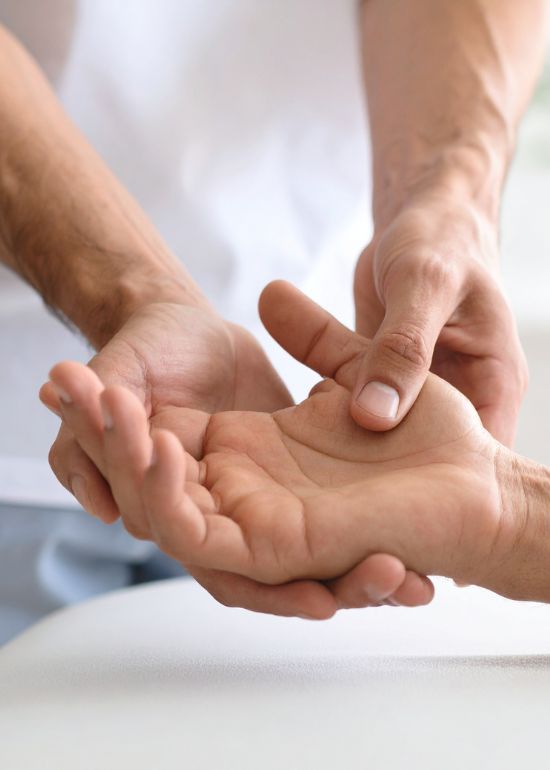
Some natural methods can gently relieve pain and relax the tissue around the thumb :
These approaches are often complementary to conventional care and can contribute to a better quality of life.
Medicines: supervised solutions
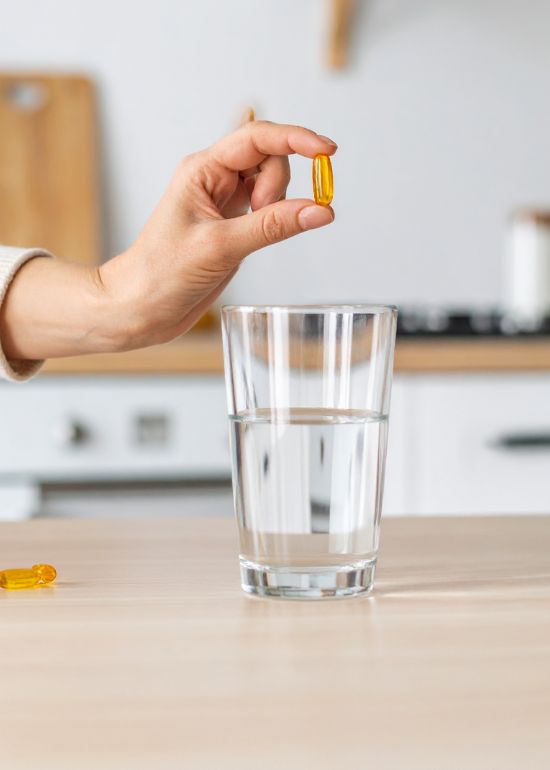
Depending on the degree of discomfort, the doctor may suggest medical treatment aimed at relieving inflammation and pain.
This may include :
These treatments should be used with care, taking into account possible contraindications.
Braces and splints: protect the joint
Wearing a thumb brace limits painful movements and stabilises the joint. This is useful :
Flexible or rigid, custom-made or standard, it is often integrated into basic treatment to relieve painful flare-ups.

Physiotherapy: maintaining mobility
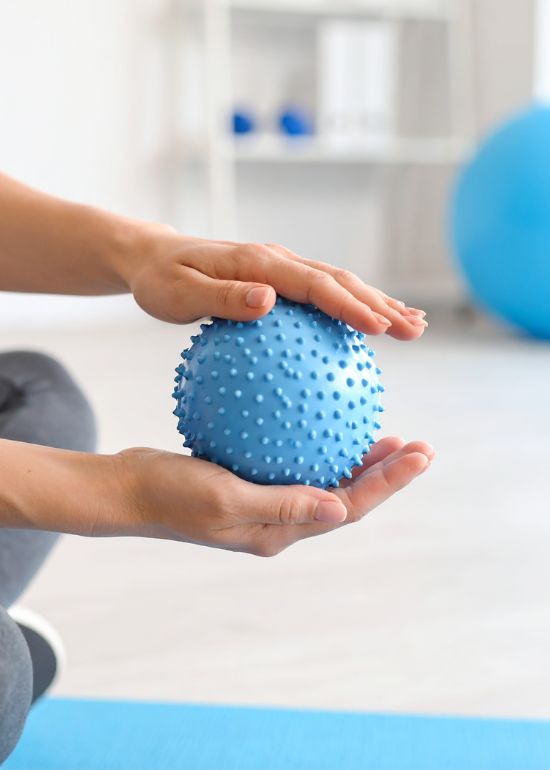
Rehabilitation is essential for limiting stiffness, maintaining thumb function and avoiding bad postures. It includes:
This active approach can be continued at home between sessions.
Injections: a targeted solution
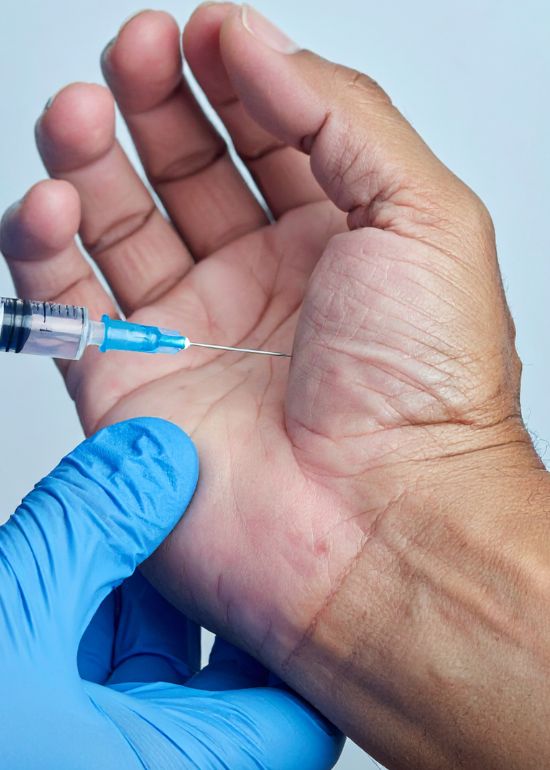
When the pain becomes difficult to manage despite first-line treatments, the doctor may suggest an injection of corticosteroids into the joint.
This procedure is performed under medical supervision, sometimes guided by an ultrasound or X-ray.
Injections provide temporary relief, often useful for tiding you over or postponing surgery.

Surgery: a solution when conservative treatments fail
Surgery is considered as a last resort, when the pain becomes disabling and non-surgical treatments no longer provide sufficient benefits.
It can take various forms:
After surgery: recovery and follow-up
Recovery after surgery depends on the type of procedure performed. It is based on:

Other daily approaches and actions
It is possible to take action on a daily basis without medicine: by modifying certain movements, by using technical aids, or by distributing efforts more effectively.
Some people also explore alternative approaches (osteopathy, acupuncture, hypnosis, electrotherapy,etc.), in agreement with their doctor.

