
Living with basal joint arthritis – a form of arthritis that affects the joint at the base of the thumb – is not limited to physical discomfort.
This condition, explained on the ‘Basal joint arthritis’ page, can profoundly change everyday life: loss of independence, restrictions at work, emotional fatigue and even withdrawal.
Understanding the global impact of basal joint arthritis, beyond pain, allows us to better anticipate its progression and identify specific actions to maintain quality of life.
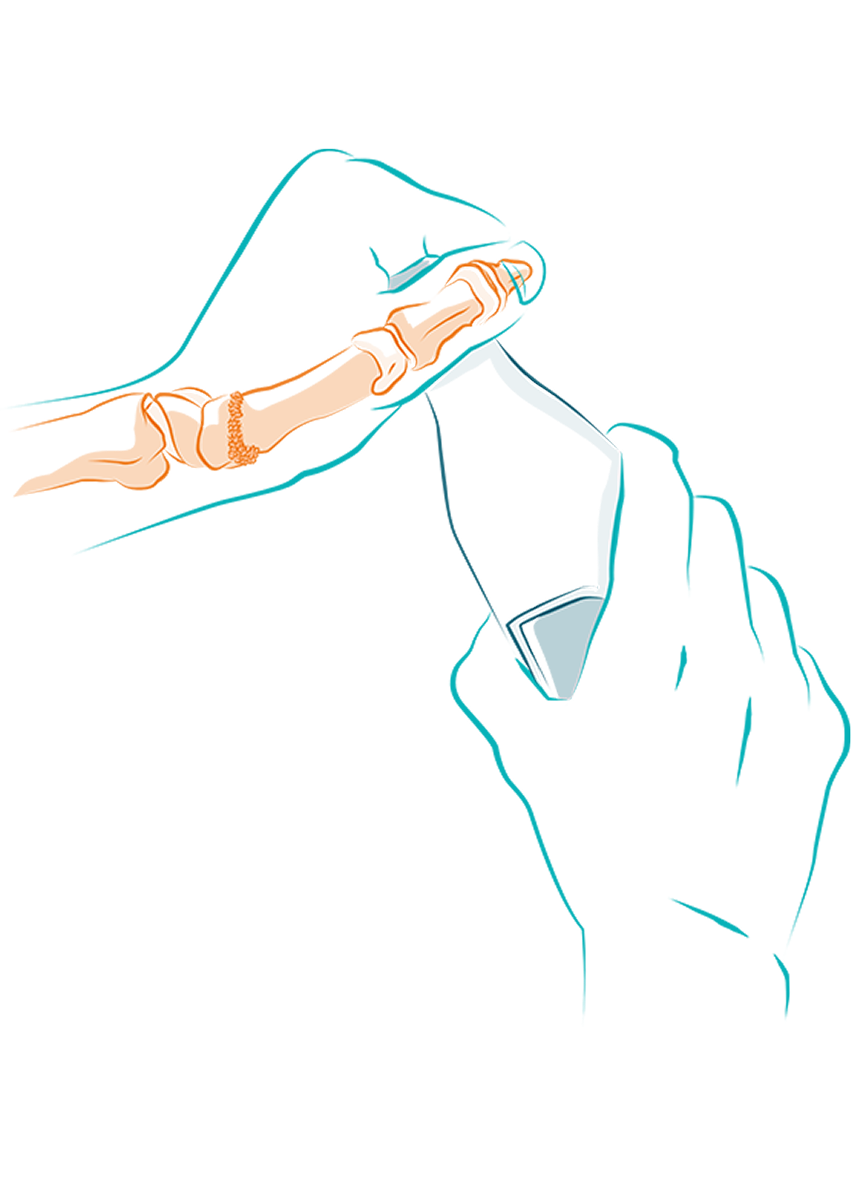
Daily discomfort that progresses over time
The first signs of the condition – pain, stiffness, loss of strength – gradually limit the movement of the thumb.
Some simple actions become difficult, such as buttoning a shirt, carrying a bag or using a phone. This functional discomfort can progress over time, reducing autonomy and increasing dependence on others.
Simple strategies allow us to act on a daily basis. The ‘Everyday movements that need to be adapted in the event of basal joint arthritis’ page offers practical tips to relieve mechanical stress and avoid unnecessary pain.
It is also possible to preserve mobility through physiotherapy, home exercises and adapted movements.
Impact on work, leisure and self-image
When basal joint arthritis affects the dominant hand, the impact at work can be significant, especially for those in manual, technical or caring roles.
Some people have to adapt their workstation or even reconsider their career. Specific recommendations are offered on the ‘Adapting how you perform your work in case of basal joint arthritis’ page.
Leisure is also affected: gardening, DIY, music or sport can become sources of pain or be gradually abandoned. However, appropriate physical activity remains beneficial. The ‘Sport and exercise and basal joint arthritis: what you can do’ page shows that you don’t have to give up.
Finally, in advanced forms, the deformation of the thumb can lead to aesthetic prejudice, sometimes very upsetting, especially in women.
This dimension is still not widely addressed but contributes to the alteration of the self-image.

A psychological impact that is often underestimated
When it becomes persistent, chronic pain – even moderate pain – can lead to mental fatigue, frustration or misunderstanding, and sometimes isolation.
In some people, it can even disturb sleep or lower self-esteem.
The ‘Psychological management of chronic pain’ page explores these invisible but very real dimensions.
The support of those around you plays an essential role here. Keeping things positive, delegating certain tasks, being listened to: these are all elements that the ‘Support for family and carers and day-to-day support’ page explains to strengthen the resilience of the patient and their loved ones.
Anticipating the stages of the condition also helps to better prepare for them.
Preserving quality of life despite your condition
It is possible to live with basal joint arthritis while maintaining a good level of comfort.
This is based on personalised care, adapted movements and sometimes the use of technical aids.
The ‘Grip help: tools for patients’ page explains simple but effective devices that can transform everyday life.
Some people also choose to adapt their lifestyle. An anti-inflammatory diet, for example, can effectively complement prescribed treatments.
All this is part of the overall treatment, discussed in the ‘Treatment and care’ section, which includes both medicinal solutions and surgery, depending on the intensity of the discomfort.
Feeling understood and supported
Sharing your experience with other patients often helps you accept the condition better. The ‘Patient testimonials’ section illustrates how each person adapts in their own way, depending on their age, situation or pain level.
For their part, healthcare professionals are there to guide, readjust treatments and support the patient’s journey.
They answer the most common questions on the ‘Testimonials from healthcare professionals’ page.


