
Certain supplementary methods can be used to relieve pain as part of a comprehensive approach for rhizarthrosis, but they should not be seen as a substitute for medical treatment.
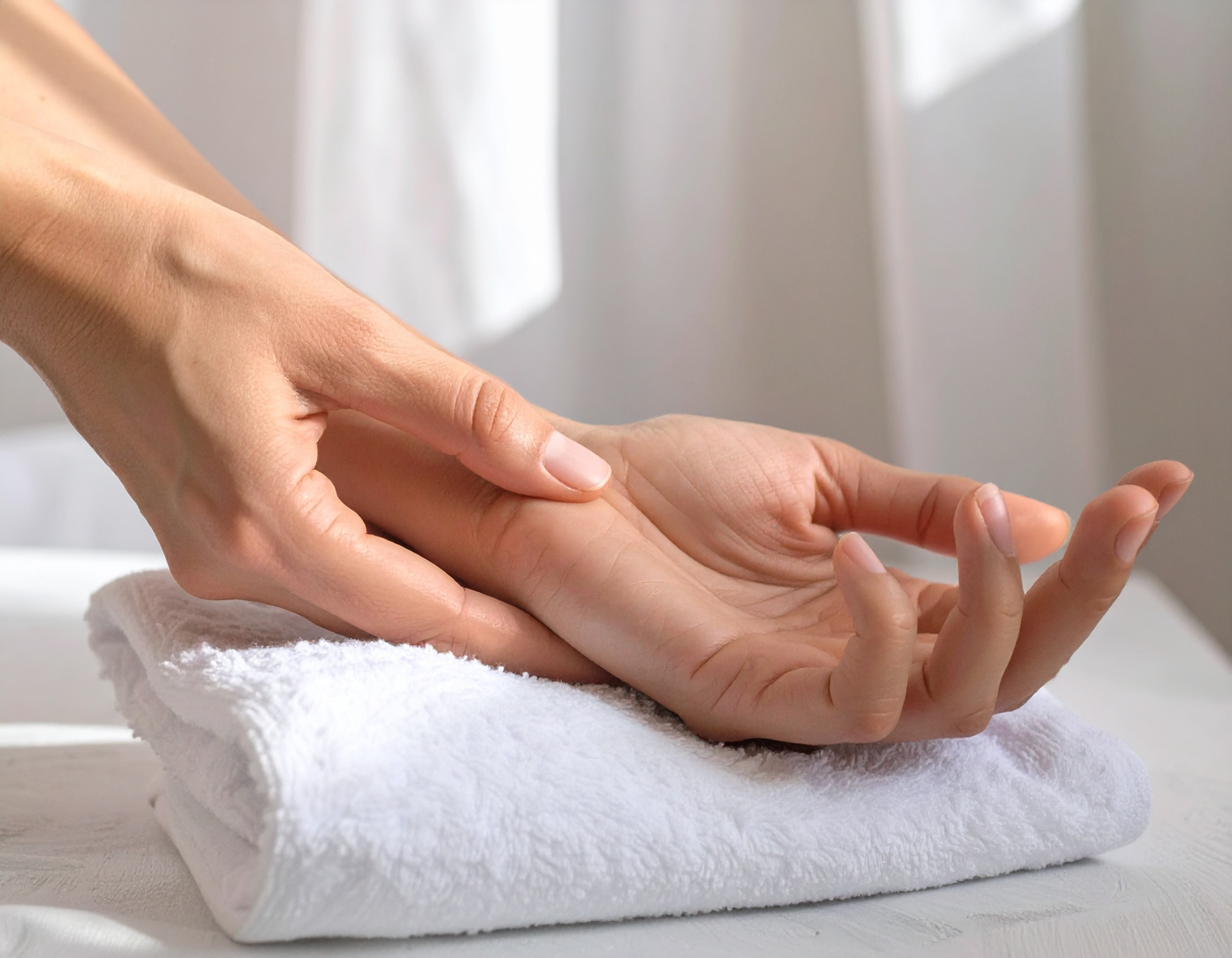
Self-massaging is one of those methods.
Anyone can do it and it can form part of your daily treatment, to relieve tension around your thumb and improve your joint comfort.
Physiotherapists often demonstrate self-massaging as part of functional rehabilitation and it provides a simple yet useful way of improving quality of life with this form of thumb arthritis.
Why massage the base of your thumb?
The trapeziometacarpal (TMC) joint at the base of your thumb is used a lot during day-to-day hand movements and activities.
When rhizarthrosis sets in, this joint progressively becomes painful, stiff and even inflamed. Regular self-massage helps to:
Self-massage is not a curative method, but it does constitute a complementary treatment method with no side effects, which can be integrated into a personal care routine.
What self-massage techniques should I use?
You do not need to be an expert masseur/masseuse – a few simple techniques, performed gently and regularly, may be all you need.
If in doubt, or if the pain persists, you are best advised to consult a physiotherapist, ideally with training in hand rehabilitation. He/she will be able to show you the right way to perform it and how to adjust your technique.
Here are the main exercises recommended:
1. Circular massaging around the joint
Use your fingertips to massage around the base of the thumb using small circular motions. The massage can either be performed on dry skin or using a neutral vegetable oil. This relaxes the tissue and soothes surface tension.
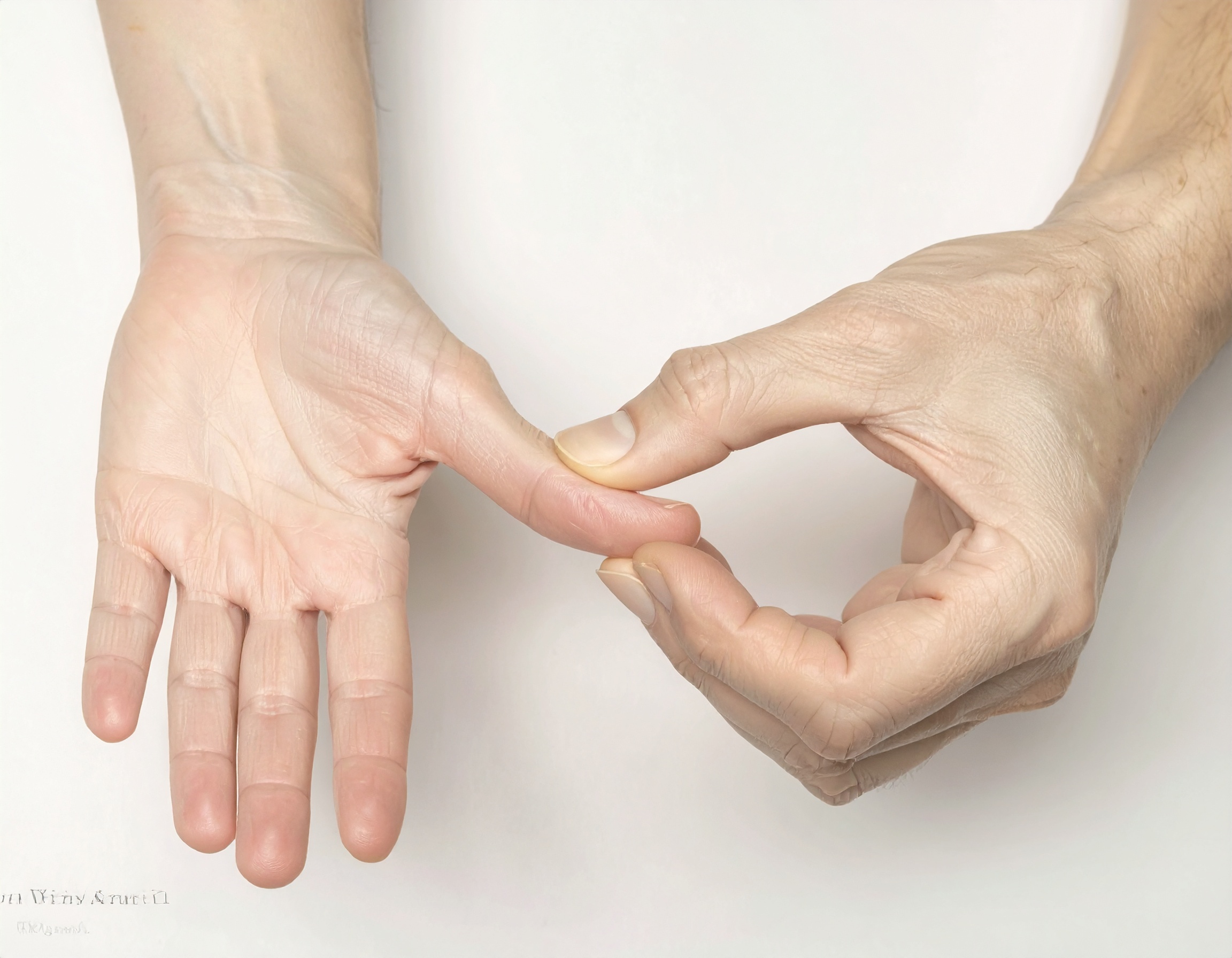
2. Massaging up the thumb using gentle sliding pressure
Work your way gradually up the thumb, from the base to the nail, applying moderate pressure. This activates the tissue and can help to improve mobility.
3. Deep palm massage
Use deeper, gliding pressure to massage the thenar eminence (the mound at the base of the thumb). This helps to relax the muscles that often tighten up with chronic pain.
4. Massaging between the thumb and index finger
Gently pinch the muscle mass between your thumb and index finger and massage it using circular movements. This area plays a key role in gripping and pinching movements and may accumulate tension.
5. Gentle passive mobilisation
Taking your thumb in your other hand, gently flex, extend and pull your thumb or move it in a circle (known as circumduction). These movements, similar to those used in self-rehabilitation, help to maintain joint flexibility without using force.
When and how often should you self-massage?
Self-massaging can be performed:
It can also form part of an overall stretching or strengthening routine, supported by a healthcare professional.
Tips for effective self-massaging
A useful component of a global approach
Self-massaging your thumb is one of the complementary and alternative solutions that can improve your everyday quality-of-life. It should be seen as a useful supporting measure, but never a substitute for :
For a better understanding of these solutions and their place in the treatment pathway, please click on ’Complementary and alternative solutions’ or go to the main page on ‘Rhizarthrosis’.


