
Living with Thumb Osteoarthritis
Philippe,
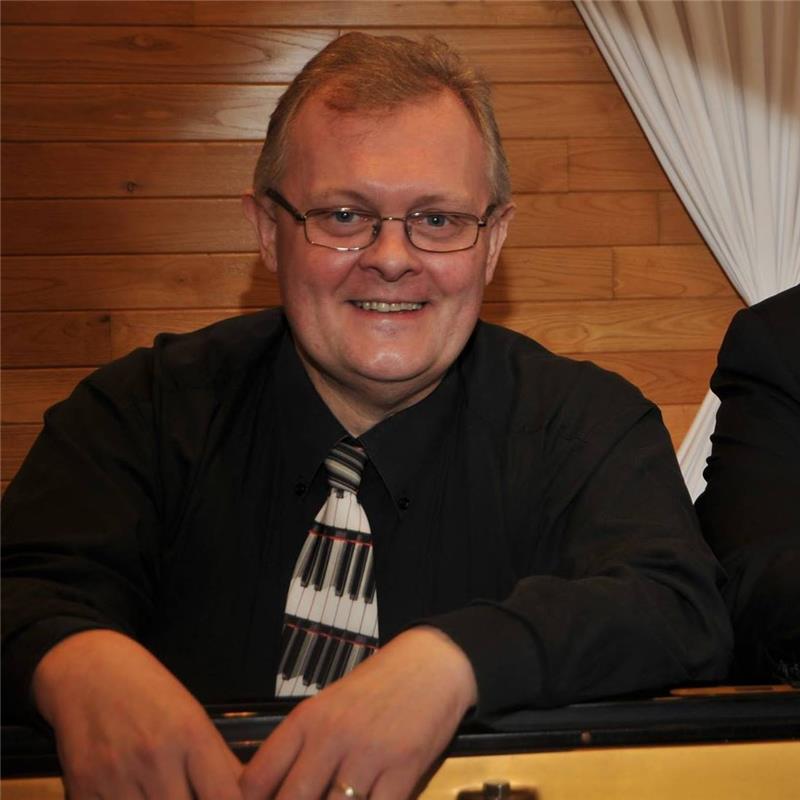
64-year-old pianist
Thumb osteoarthritis, also called rhizarthrosis, is a condition that affects thousands of people. It can make simple daily tasks difficult -opening a jar, carrying a bag – and becomes even more disabling when the hands are essential for work. This is the case for Philippe, a 64-year-old pianist from Belgium, who agreed to share his experience.
Through his story, we discover not only his journey after surgery on both thumbs, but also how he managed to regain much of his mobility and continue working with passion.

Discovering Thumb Osteoarthritis as a Pianist
Philippe has been playing the piano for several decades.
Every day, he spends several hours at his instrument – rehearsals, concerts, teaching. But gradually, pain and loss of strength appeared in his thumb, preventing him from playing certain fast passages.
« Some of my fingers would go numb. To compensate, I would lift my elbows or raise my wrist, but I had lost my speed and precision. »
For a pianist, even a slight loss of mobility becomes a barrier. This is what led him to seek medical advice and, after discussing options with his surgeon, consider surgery.
A successful first operation
The first procedure was a turning point. After just 10 to 15 days, Philippe was able to start working on piano exercises again.
His strength: the discipline of a professional musician. Every day, he practised scales, arpeggios and fast passages – an intense and natural form of rehabilitation.
« I recovered the technique I once had. I could straighten my wrist again and play quickly. It felt like a true musical rebirth. »
A second operation a few years later
Encouraged by this success, Philippe chose to operate on his second hand. Once again, recovery was quick. The main difference came from a slight change in strength.
« In some very demanding concertos, like Tchaikovsky, I feel a small loss. The power I used to have is now slightly lower. But the dexterity and speed are still there. »
This nuance matters: while surgery restores mobility and precision, some patients may notice a subtle change in strength. For Philippe, now 64, this has not limited his career. But he points out that for a 30-year-old pianist still building their career, the decision might be different.
Returning to everyday life – with a few precautions
Beyond playing the piano, Philippe also regained his everyday abilities.
Carrying a bottle, writing, cooking – everything became possible again.
However, he keeps a few safety habits:
These small adjustments have now become part of his daily routine.
The role of exercises in recovery
After each surgery, physiotherapy is usually recommended. Philippe, however, mainly used the piano as a rehabilitation tool.
His exercises, focused on the thumb’s movement in relation to the other fingers, helped him recover quickly.
« I move the thumb under the index finger, then under the third, under the fourth… Repeating these movements on the keyboard improves flexibility and speed. »
This daily practice illustrates the importance of stimulating the operated joint to maintain mobility.
What his story teaches us
Philippe’s journey highlights several key points about thumb osteoarthritis and its management :
A message for patients who are hesitant
Many musicians or manual workers hesitate to undergo surgery, fearing permanent loss of mobility.
Philippe chose to believe in the process:
« I know colleagues who rely on injections before concerts. They suffer, and it doesn’t cure anything. For me, surgery was a real relief. I recovered my dexterity and the pleasure of playing. »
Conclusion
Philippe’s testimony is inspiring: thanks to surgery, he has been able to continue his career as a pianist with passion. While he notes a slight decrease in strength for very demanding pieces, he emphasises above all the speed of recovery and the comfort he has regained.
For people affected by thumb osteoarthritis, his experience is a reminder that solutions exist – adapted to each situation – and that regaining mobility is absolutely possible, even in professions where hands are essential.
