
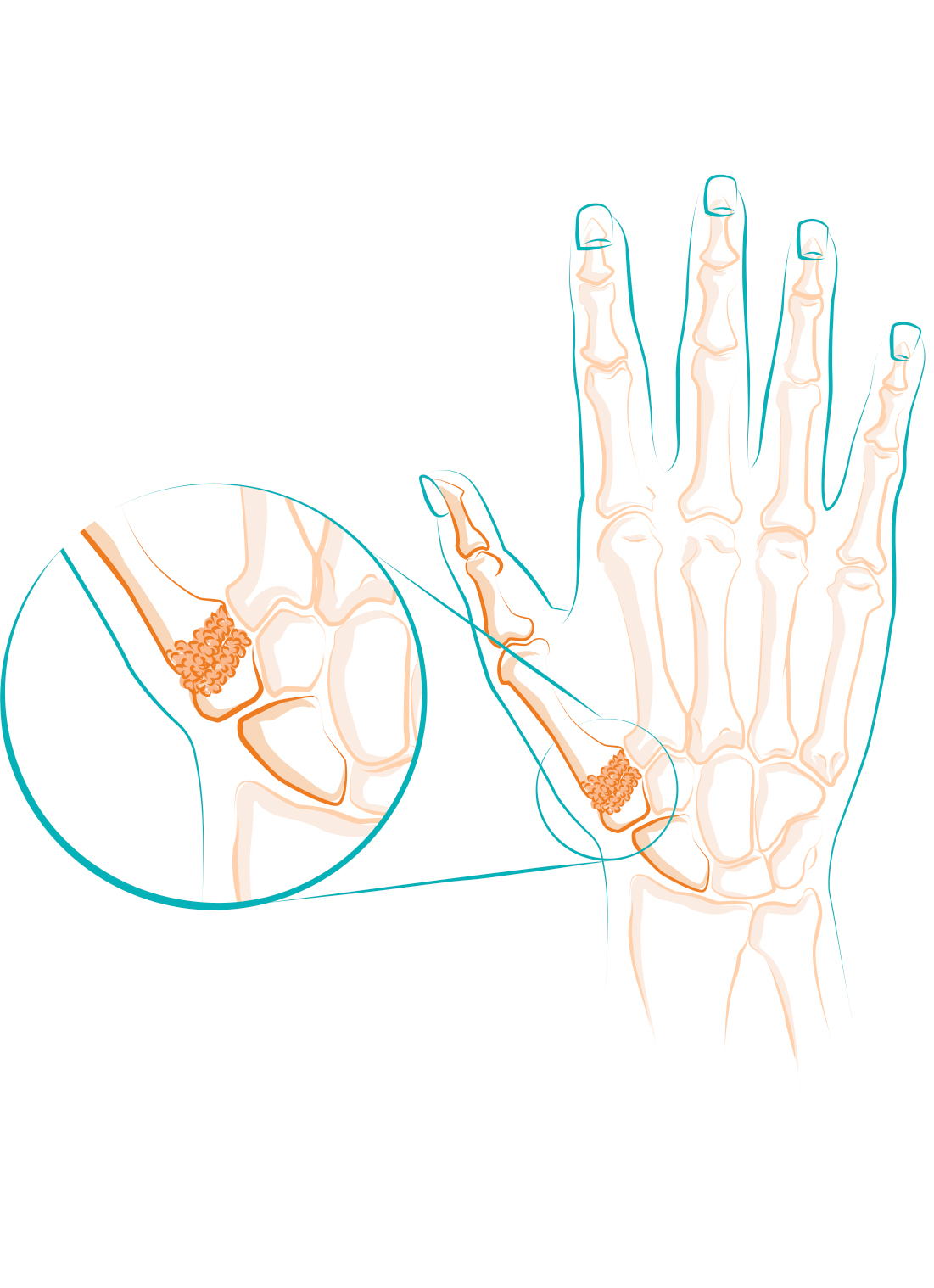
Rhizarthrosis is a form of arthritis at the base of the thumb.
The question most often asked, as with all degenerative joint conditions, is this: ‘Is there any hope of a cure?’
This page forms part of our section on ‘Understanding rhizarthrosis’, which discusses the mechanics of the condition, its symptoms and its progression.
A chronic condition with no current cure
Rhizarthrosis is caused by progressive wear of the cartilage in the trapeziometacarpal (TMC) joint.
At present this cartilage damage, often linked to age, repetitive movements that put strain on the thumb, or anatomical factors, is irreversible. There is no medical treatment available that can repair the cartilage or reverse the effects of rhizarthrosis,
and so it cannot be ‘cured’ per se, but that does not mean that you will just have to grin and bear it and that there are no solutions available.
Treatments for pain relief and maintaining thumb function
Even though it cannot be fully cured, there are ways to ensure less pain while maintaining some thumb mobility and to slow progression of the condition. Treatment is based on two main approaches:
Details on these solutions can be found in our pages on treatment and care, maintaining mobility and day-to-day life with rhizarthrosis.

It is possible to slow down progression
Rhizarthrosis progresses gradually and sometimes irregularly:
some patients experience periods of stability for a number of years, whilst others have to put up with more pronounced inflammatory flare-ups.
Simple measures can help to slow down joint wear:
These measures are an integral part of the prevention strategy as described under ‘Prevention and education’.
Surgery: a lasting solution in certain cases
Surgery: a lasting solution in certain cases
When pain becomes permanent and it is no longer possible to perform everyday hand movements, despite conservative treatments, thumb surgery may be the only option. Even thumb surgery does not represent a ‘cure’ in the strict sense of the term, but it is an effective therapeutic option for restoring thumb function and eliminating pain.
The two main forms of surgery used are :
These operations are performed by specialists in hand surgery.
If you are unsure whether you require surgery or are suffering from persistent discomfort, consult a hand surgeon.
Living with rhizarthrosis without giving up
There is no miracle cure available at the moment.
However, there are concrete solutions for pain relief and to help you maintain your independence and continue living a full life, despite this condition.
In most cases patients are able to resume a balanced life, based on specially adapted monitoring, proper understanding of the condition and simple adjustments to their day-to-day lives.


