
When it becomes painful and bothersome on a daily basis, basal joint arthritis may require targeted treatment.
Among the options considered before an operation, joint injections play an important role.
They are part of progressive treatment that combines different medical, functional or alternative approaches.
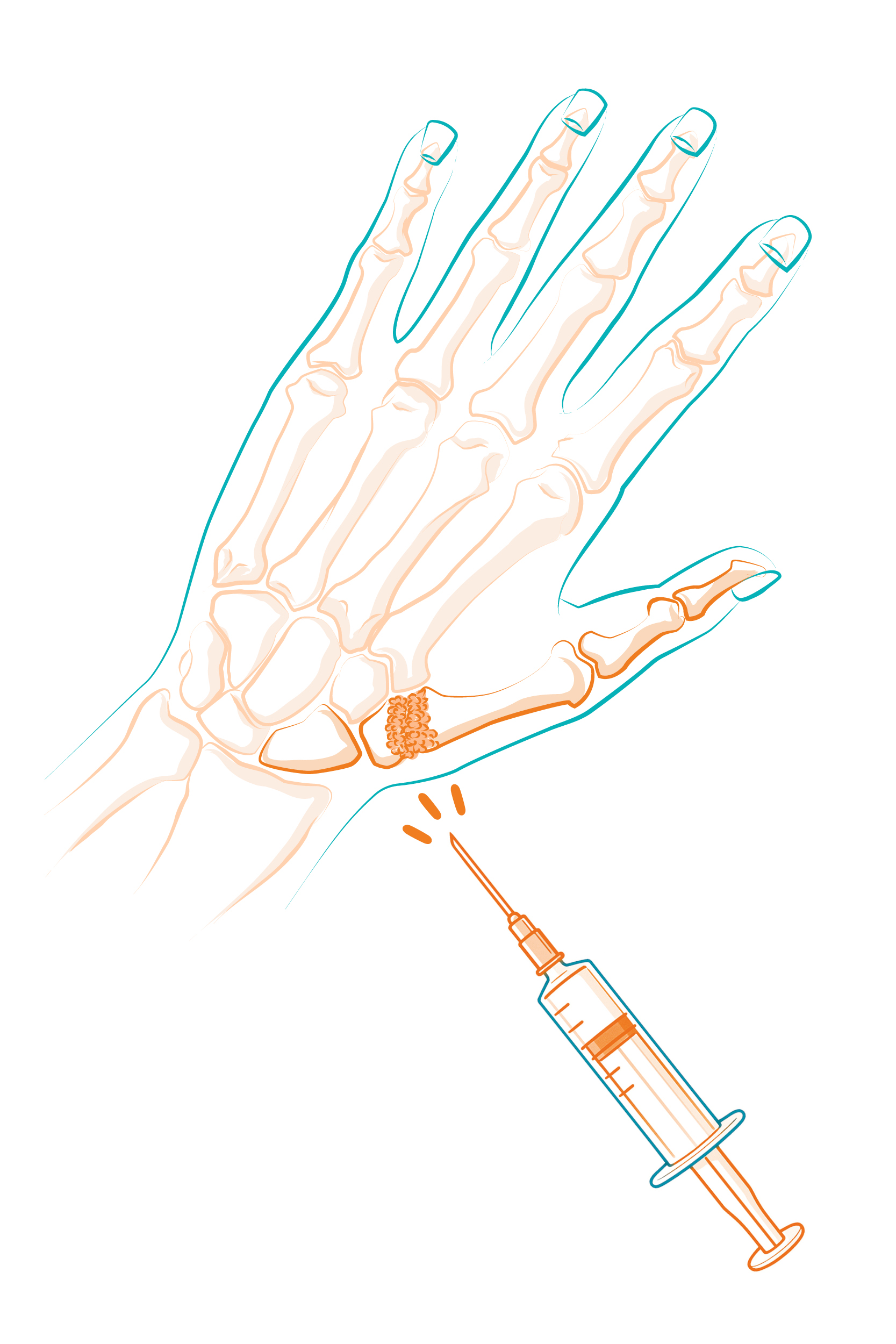
How do injections work?
This is a simple medical procedure:
an anti-inflammatory product, usually a corticosteroid, is injected directly into the trapeziometacarpal joint at the base of the thumb. This is intended to quickly relieve a painful flare-up. The injection is given at an outpatient appointment, sometimes under X-ray or ultrasound guidance for more precision.
In some cases, hyaluronic acid is combined with cortisone (viscosupplementation) for its lubricating effect. It works locally and fast, but is temporary.
This joint is explained in detail in ‘Understanding basal joint arthritis’.
When are they proposed?
Injections are usually considered when pain persists despite first-line treatments:
They can also play a comfort role, pending a more durable solution if functional discomfort becomes too great.

How effective is it?
Results vary from patient to patient. There may be an improvement within the first 48 hours, sometimes later.
The effect lasts from a few weeks to a few months. Injections do not stop the condition progressing, but can significantly increase comfort.
Injections can be repeated but only every so often (usually two to three times a year) to avoid weakening the joint. In the case of chronic pain, other treatments may be considered.
These steps are described in detail in ‘Living with basal joint arthritis’.
Are there any risks or contraindications?
Side effects are rare :
transient pain following movement, localised swelling, redness and in exceptional cases infection. A poorly tolerated injection may indicate too much wear and tear of the joint, in which case surgery should be considered.
In some patients with diabetes, cortisone may be contraindicated because it can cause a blood sugar imbalance.
In this case, an injection of hyaluronic acid without a corticosteroid may be preferred.

What is their role in the overall care journey?
The injection is a solution to be used occasionally as part of an overall strategy.
It is rarely enough alone. It complements wearing a brace or splint, rehabilitation, or even alternative approaches.
It may also be considered after surgery if discomfort persists or if inflammation reappears.
The importance of medical follow-up
The use of injections should be decided with a healthcare professional, depending on the stage of progression of the basal joint arthritis.
A follow-up allows care to be adjusted according to the response to treatment.
Feedback from professionals can also be of valuable assistance when making this decision.


