
While medical treatment remains at the heart of care (braces and splints, medication, physiotherapy, even surgery), some people also seek to complement their treatment with alternative approaches.

Among these, food supplements are playing an increasingly important role.

But can they really relieve symptoms or slow down progression? Are they useful for strengthening joints? This page looks at the benefits, limitations and precautions to be aware of, in addition to other alternative solutions for basal joint arthritis.
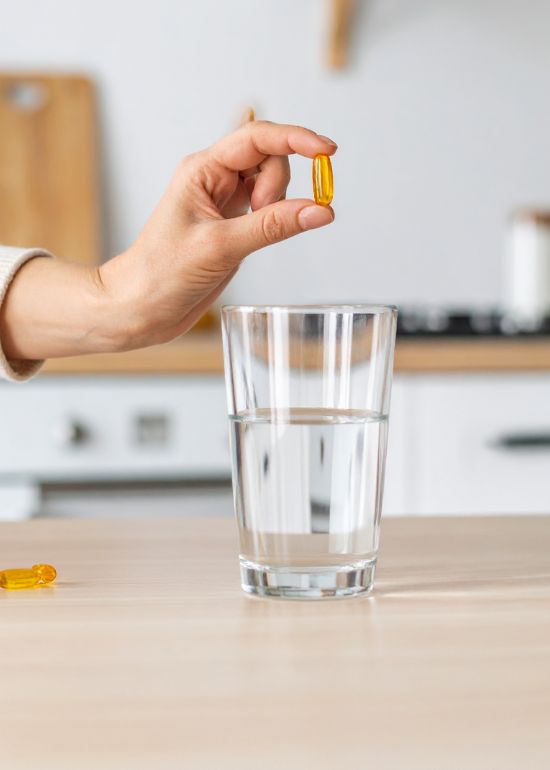
Which supplements are most commonly used for thumb arthritis?

There are many food supplements available for joint pain.

Here are the ones most frequently mentioned in recommendations or on the shelves of pharmacies and specialist shops:

  • Oméga-3 (fish or krill oil) : Their moderate but recognised anti-inflammatory effect makes them potential allies in cases of chronic pain.

  • Collagène (type II notamment) : This component of cartilage shows promise, particularly in people over 60, for preserving joint flexibility.

  • Chondroitin and glucosamine: Widely studied, these two nutrients are naturally present in cartilage. Their efficacy is still debated, but some patients report an improvement in pain.

  • Vitamins and minerals: vitamin D, vitamin C, zinc, selenium play a role in maintaining immunity and tissue health, with no direct action on basal joint arthritis but great for overall support.

  • Anti-inflammatory plants: turmeric, boswellia, devil’s claw… A product of phytotherapy, they prove to be quite effective when concentrated and at the correct dosage, provided they are well tolerated.

What the studies say: variable effectiveness, possible placebo effect

There is a great deal of research into the use of food supplements in joint conditions, particularly arthritis.

However, the results are often heterogeneous and inconclusive:

  • Some clinical trials have observed a slight improvement in pain or mobility, particularly with glucosamine or omega-3.

  • Others show no significant benefit compared to a placebo.

  • Collagen has been the subject of encouraging recent studies, particularly in knee arthritis, but there is a lack of data specifically for basal joint arthritis.

The placebo effect, although often underestimated, can also play a positive role in the perception of pain. It’s not an illusion: if a supplement provides lasting relief, even if it’s partly subjective, it’s still good for quality of life… provided it’s well tolerated and risk-free.

Food supplements: good practice

If you are considering taking a dietary supplement for your basal joint arthritis, here are some useful guidelines:

  • Seek the advice of a health professional (doctor, pharmacist, nutritionist), especially if you are already undergoing treatment or have other health problems.

  • Beware of interactions: some supplements can interact with treatments such as non-steroidal anti-inflammatory drugs (NSAIDs) or anticoagulants.

  • Choose quality products at an appropriate dosage which come from recognised laboratories and undergo rigorous checks.

  • Avoid prolonged courses of treatment without medical supervision.

  • Never substitute a food supplement for a validated medical treatment.

Support, not treatment in its own right

Food supplements are neither a miracle solution nor an alternative to proper medical care.

In some cases, they can provide overall support, with a moderate reduction in inflammation, improved joint tolerance and a feeling of comfort.

They form part of a broader approach, alongside other options such as:

  • a diet adapted to thumb arthritis

  • managing pain without medicine

  • wearing a night splint or functional thumb brace

  • or certain natural practices.