
When rhizarthrosis, a form of osteoarthritis at the base of the thumb, sets in, it gradually changes the way we perform the simplest of tasks and movements.
Opening bottles, turning a key, doing up the buttons on a shirt are just a few examples of tasks that can become painful or even impossible.
If you adapt the way you perform hand movements, tasks and activities, though, you can relieve the pain, slow down joint wear and keep your hands fit for everyday use. This forms an integral part of management of rhizarthrosis, a chronic condition covered in detail on our main page, ‘Rhizarthrosis’.
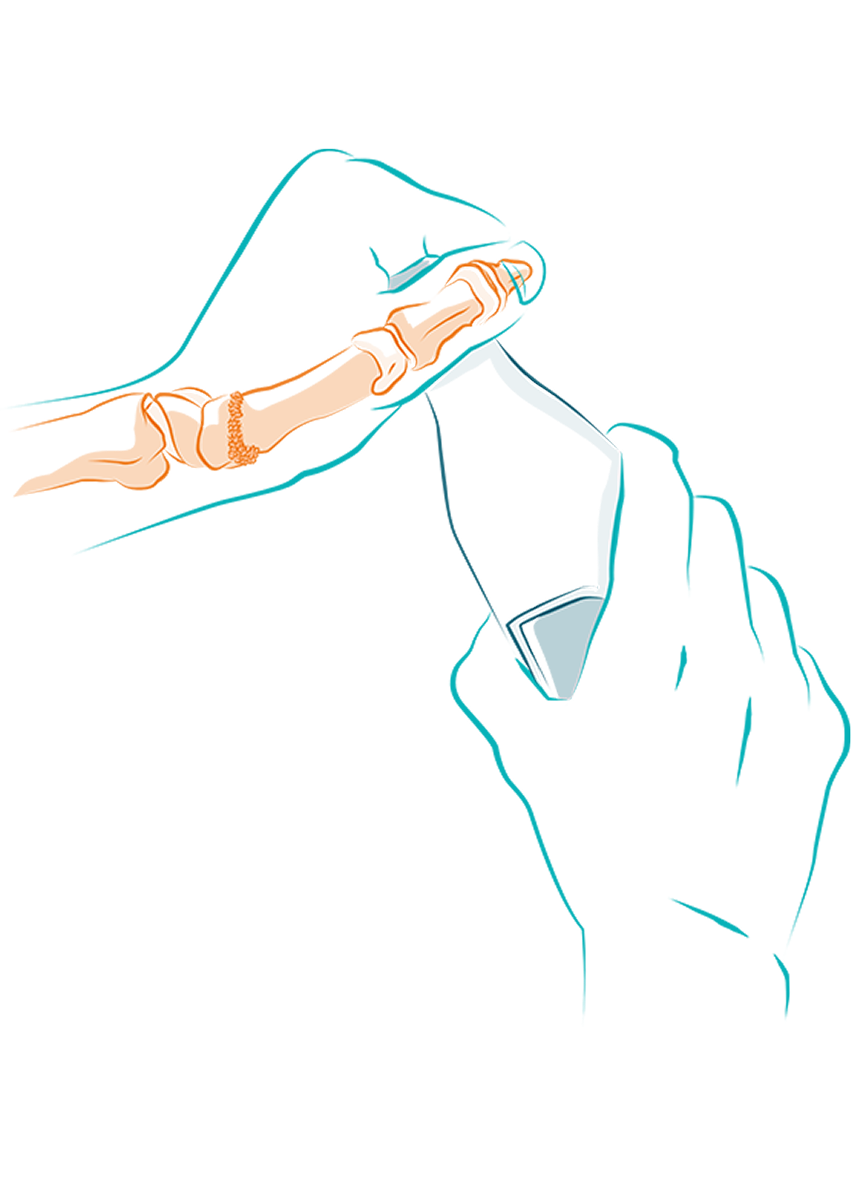
Daily relief for the thumb joint
One of the first habits to adopt is to reduce overuse of the trapeziometacarpal (TMC) joint, caused in particular by pinching movements (between the thumb and index finger).
This can be achieved by using a wider arc of movement, not gripping too tightly and spreading the load better between both hands.
For example :
These measures may seem simple, but they are among the most effective strategies for limiting day-to-day pain. Many patients report that these simple adjustments have allowed them to continue cooking, performing DIY or gardening in more comfort. You can read real-life accounts in our ‘Patient testimonials’ section.
Use specially adapted technical aids and tools
Using ergonomically designed tools can often really help.
Some tools are specifically designed to limit thumb strain or reduce the effort required:
These are just some of the many grip aids that you can use as part of your day-to-day life.
A well-fitting brace or splint can also be used for temporary immobilisation of the thumb during painful periods (see the page on wearing a brace or splint).

Reorganising your living space
Adapting your living space is just as important as changing the way you do things.
If your home is adapted properly, it can help to prevent high-risk movements and reduce joint fatigue.
Here are some specific ideas :
These tips follow on from those discussed on our page on ‘How to maintain thumb mobility despite rhizarthrosis’, which also explores the role of physiotherapy and occupational therapy in maintaining manual independence.
Reassessing your routine and the pace you go about things
How can you perform the same tasks, but differently ?
This is often a very difficult challenge, but the changes made can often be the most effective solution. We recommend the following changes if you develop rhizarthrosis:
Knowing how to ask for help or accept a helping hand can also be very important. Support from friends, family and carers is invaluable, and our page on day-to-day support is devoted to them.
The above tips on changing how you go about things also tie in with the advice offered under ‘Complementary and alternative solutions’, which looks at the benefits of certain non-pharmacological methods, such as sophrology, self-hypnosis and relaxation techniques.
Taking action across the board
Pain is not just mechanical. It can be affected by inflammation, stress, fatigue, etc. That is why certain approaches used in parallel can help against general pain:
Adapting your hand movements also allows you to feel in control of the condition. Many patients report that making simple adjustments has helped them to regain their confidence and maintain their quality of life, despite the pain.


Further reading:
