
Pain associated with thumb osteoarthritis often leads many people to explore complementary approaches.
Among these, essential oils are attracting growing interest.
Used in massage or through diffusion, they are sometimes mentioned for their potential anti-inflammatory or pain-relieving properties. But what does the evidence actually show? Do studies support their use in the context of thumb osteoarthritis?
This topic forms part of a broader approach to complementary and alternative options for managing thumb osteoarthritis.

Growing interest in aromatherapy for joint pain
Aromatherapy – the use of essential oils for wellbeing purposes – is sometimes associated with the management of chronic musculoskeletal pain.
In the case of thumb osteoarthritis, where pain is often localised, certain essential oils are considered as part of gentle local massage or supportive care.
The oils most frequently mentioned in the literature include:
What do studies say about the effectiveness of essential oils?
To date, clinical studies specifically focused on thumb osteoarthritis are limited.
However, some research conducted on more general forms of osteoarthritis (such as knee or hip osteoarthritis) provides useful insights.
Lemon eucalyptus: promising anti-inflammatory effects
A study published in 2015 (Kim et al.) evaluated the impact of regular massage using lemon eucalyptus oil in patients with knee osteoarthritis. Participants reported a significant reduction in pain after several weeks of application, with good overall tolerance.
Wintergreen: effective, but with precautions
Wintergreen essential oil is known to contain methyl salicylate, a compound similar to aspirin. For this reason, it may offer localised pain-relieving effects.
However, its use requires caution. It is not recommended for individuals with salicylate allergy, those taking anticoagulant medication, or people with a history of allergic reactions. It should always be diluted and used only with medical advice.
True lavender: an indirect impact on chronic pain
Broader studies on chronic pain management have highlighted the benefits of lavender in reducing stress, improving sleep quality and influencing pain perception. For people with thumb osteoarthritis – who may also experience tension or emotional fatigue – these indirect effects can improve day-to-day quality of life.
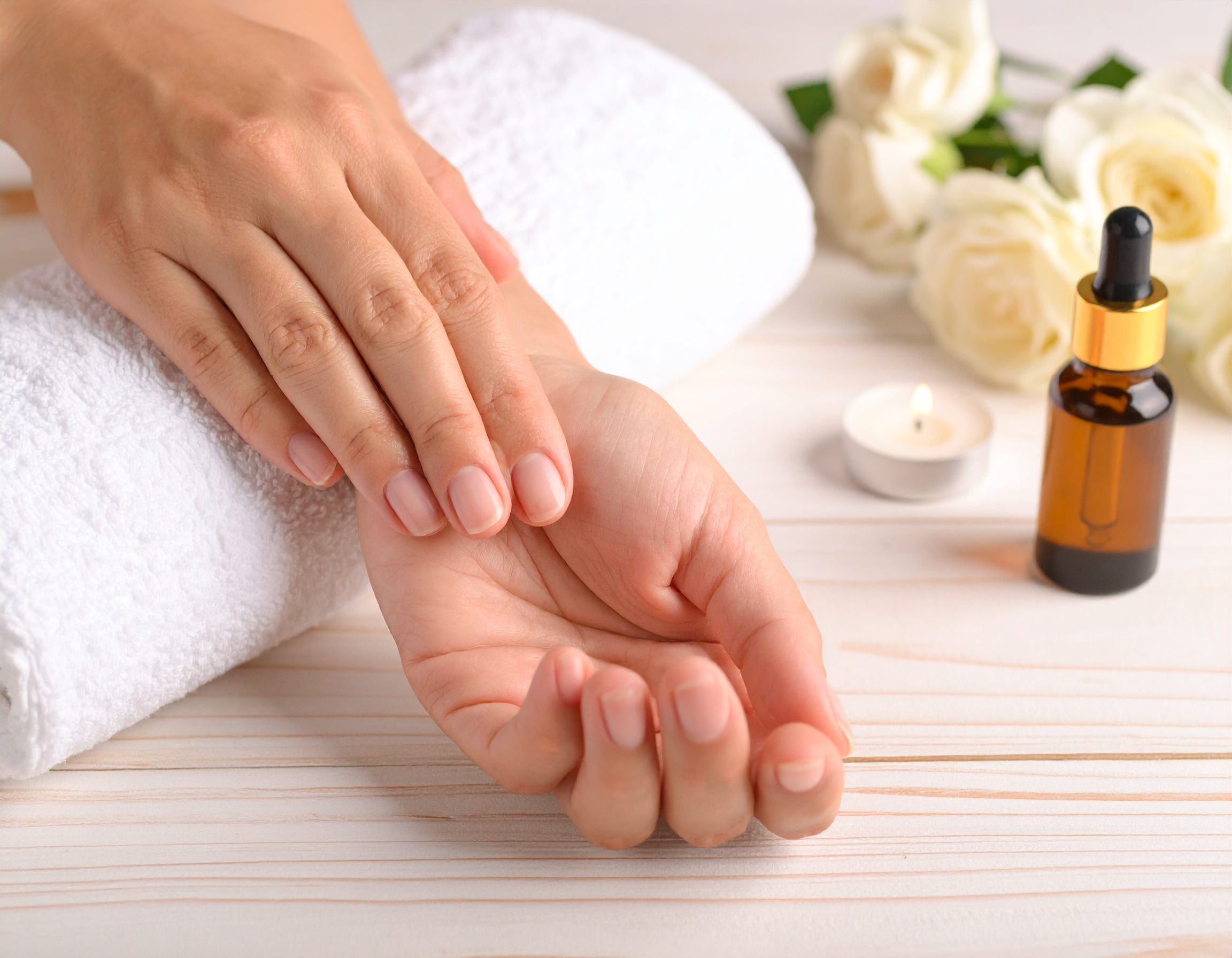
Practical use: key points to keep in mind
When used in the context of thumb osteoarthritis, essential oils are mainly applied through:
Seeking advice from a healthcare professional or a trained aromatherapist is recommended, especially if you are following a medical treatment at the same time.
Part of a broader, complementary approach
Essential oils do not replace medical treatments or the daily adaptations required to manage thumb osteoarthritis.
They may, however, be included as part of a wider management strategy, alongside:
Some people also explore other approaches such as acupuncture, sophrology or herbal medicine, which are presented in more detail in the website’s complementary and alternative solutions section.

