
Rhizarthrosis, also known as basal joint arthritis, often sets in without you even noticing it
There are early warning signs before the pain becomes incapacitating:
discomfort when pinching your thumb and index finger together, loss of strength, cracking in the joint. If these signs are spotted as soon as they appear, action can be taken quickly to limit progression of the condition and preserve thumb function.
Following on from our main page, ‘Rhizarthrosis’, this page explores the importance of early detection and simple ways of doing so.
Why is early detection so vital?
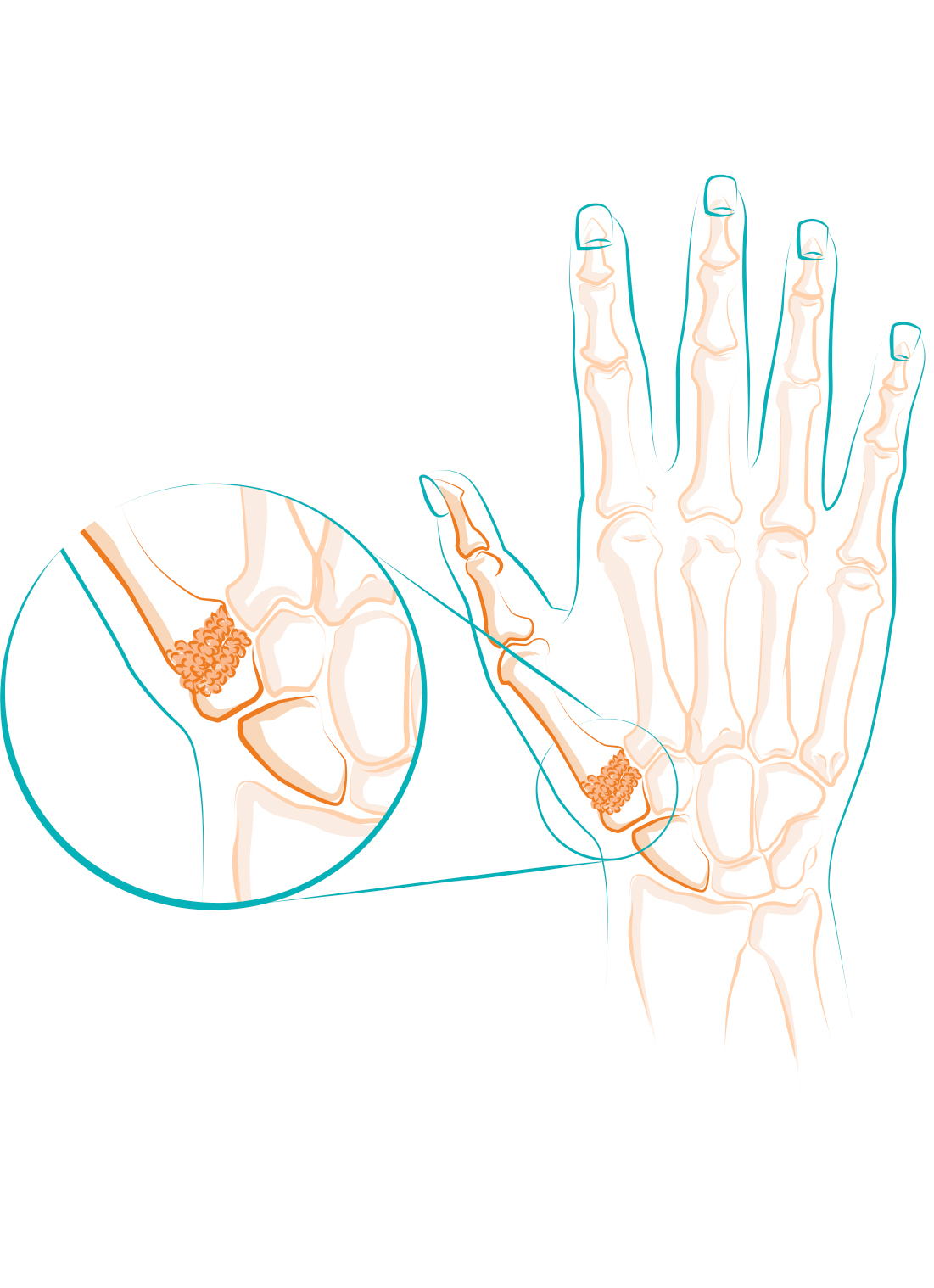
Rhizarthrosis is a degenerative condition that affects the trapeziometacarpal (TMC) joint at the base of the thumb.
If left untreated, the cartilage damage may deteriorate and lead to chronic pain, loss of mobility and, in certain cases, deformation of the thumb.
Early detection enables the following:
It is a vital part of prevention and education and needs to be focused on from when the very first signs appear.
First signs that must not be ignored
Rhizarthrosis often creeps up on you without you noticing. Certain symptoms may develop long before it is medically diagnosed.
If you keep an eye out for those signs, action can be taken early.
Here are the warning signs to look out for:
If you recognise any of these symptoms, you should seek medical advice. Simple measures such as warm-up exercises or occasionally using a custom brace or splint can then be considered.

Where can you go for a reliable diagnosis?
Diagnosis is based on a clinical examination by a GP, rheumatologist or hand specialist.
They will look for pain when they palpate the TMC joint and may perform a specific test known as the grind test, combining compression and rotation of the thumb.
In the event of doubt or significant discomfort, a standard X-ray is generally sufficient for confirmation of the diagnosis, because it shows up the joint damage.
Tests such as an MRI scan or ultrasound are only used in specific situations (atypical or very early forms of the condition). They are not recommended for initial diagnosis for suspected rhizarthrosis.
When conservative treatments no longer provide relief, it may be time to consult a hand surgeon.
How can rhizarthrosis be detected early?
Patient vigilance is just as important for early detection as monitoring by a healthcare professional
A number of methods can be used to improve detection:

Acting as soon as the first signs appear
After the first signs have been detected, active adaptation of hand use is vital.
Simple measures can be taken to slow down the progression of the condition and limit discomfort.
Useful measures to adopt at an early stage include the following:
Further information on preventative strategies can be found in our page on ‘Preventing rhizarthrosis as soon as the first signs appear’.
Remember:


