
The thumb is the cornerstone of hand movement.
It enables you to catch, squeeze, write, open things and much more…
Its mobility and strength are based on a very specific joint, located at the base of the thumb called the trapeziometacarpal joint.
This is the joint that is affected in the case of basal joint arthritis, a form of localised arthritis presented in detail in the main page on basal joint arthritis. This progressive condition mainly affects women over 50, but may occur earlier in people performing repetitive and restrictive hand movements.
If you understand the anatomy of the thumb, it is easier to understand what is causing the pain and to anticipate the repercussions on day-to-day life.

An essential joint for gripping
The trapeziometacarpal joint connects the first metacarpal (thumb bone) to a small bone in the wrist called the trapezium. This joint, which is shaped like a saddle, allows great freedom of movement:
Other essential structures revolve around this joint:
What happens when you have basal joint arthritis?
When basal joint arthritis sets in, this whole precision mechanism goes wrong.
The cartilage, normally smooth and insensitive, is gradually worn down. This thin layer covers the bone ends and enables the bones to glide painlessly. In the case of basal joint arthritis:

The first visible consequences
Over time, this damage leads to:
These signs are among the first symptoms of basal joint arthritis. They may appear gradually or during more pronounced flare-ups.
Disrupted daily actions
The thumb is involved in nearly 4 out of 10 hand movements.
When the joint is painful or stiff, the repercussions are felt quickly when carrying a bag, buttoning an item of clothing, sending a message, cutting food, etc.
Fortunately, it is possible to adapt your movements to protect the joint while continuing your activities. The use of gripping aids or alternative movements can provide considerable relief.
Similarly, some adapted exercises help maintain a minimum of joint mobility.
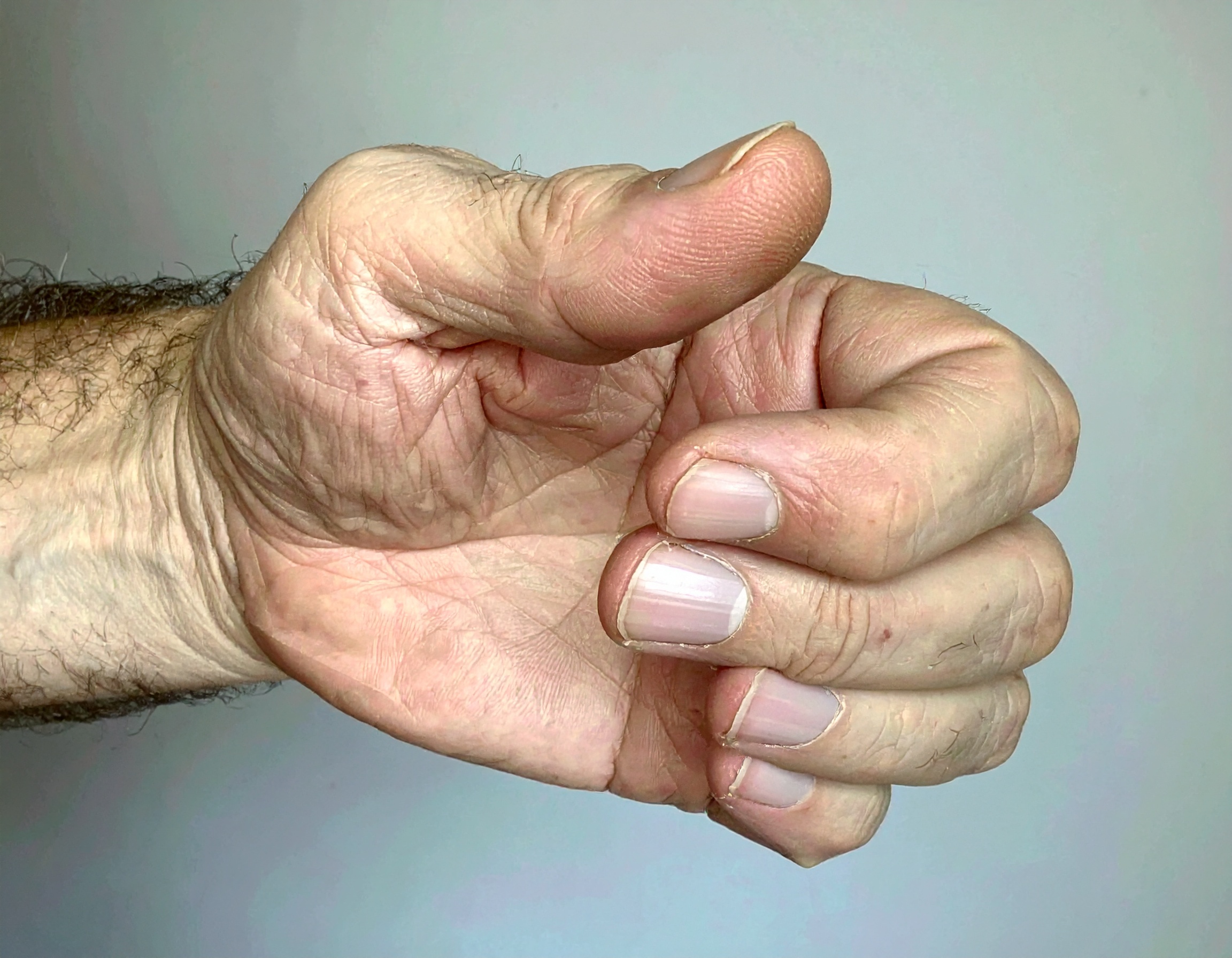
Thumb deformation: an advanced sign
In the more advanced forms of basal joint arthritis, the very structure of the thumb changes.
This is referred to as a zigzag deformit :
This deformity is often associated with a significant loss of mobility.
It reflects an advanced stage of the disease, described in the page on the stages of progression of basal joint arthritis.
Why understanding the anatomy helps you take better care of yourself
The more we understand the central role of this joint, the easier it is to:
Depending on the stage and impact on your daily life, treatment may include medical or surgical treatment, custom-made braces and splints, or complementary solutions such as massage or electrotherapy.
When the discomfort becomes too great despite complying with treatment recommendations, consultation with a hand surgeon may be considered.


